

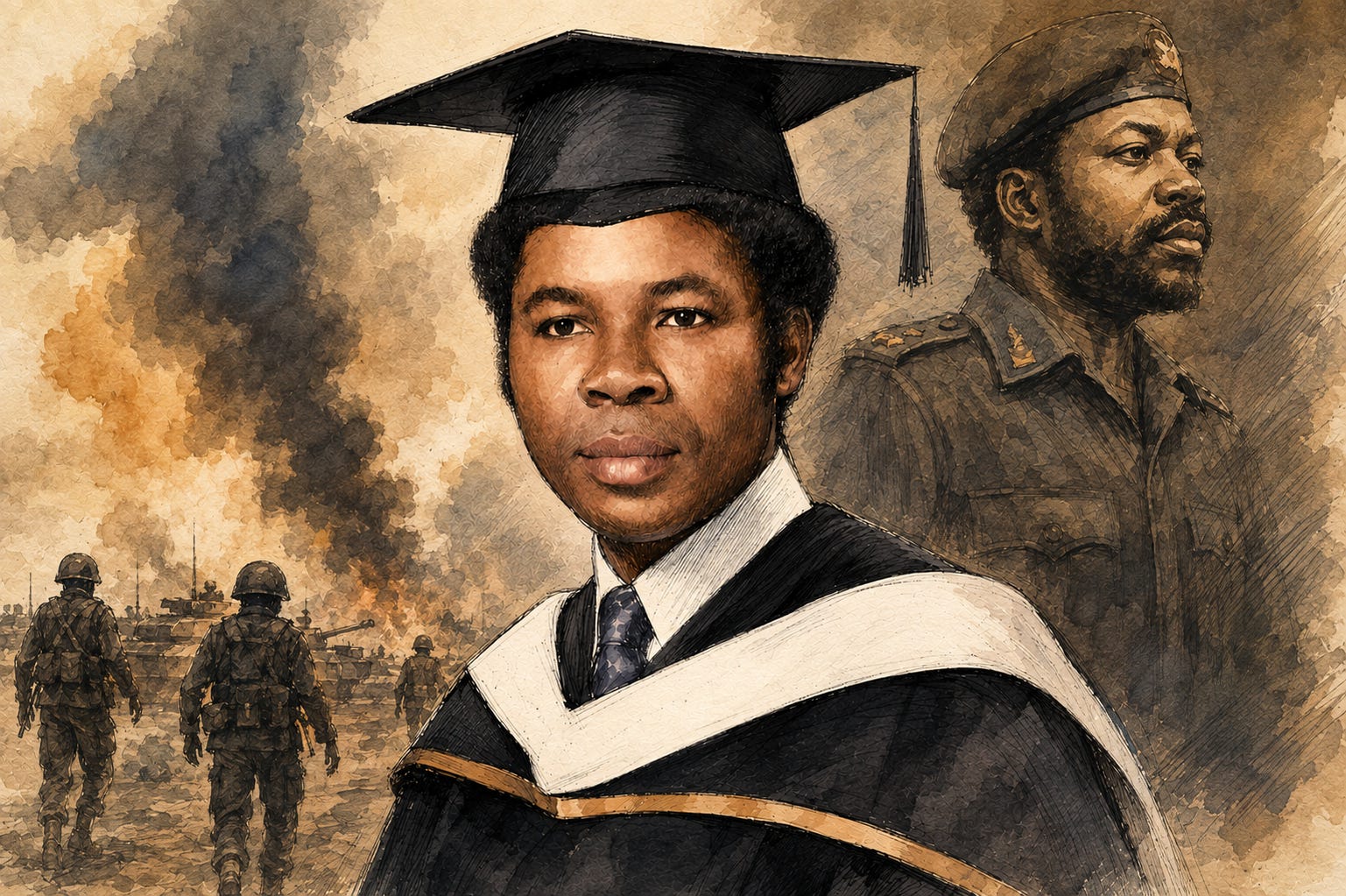
On April 11, 1968, the Nigeria-Biafra war was raging in Uyo, the south of the secessionist state. A few days earlier, federal troops, the third Marine Commando led by Colonel Benjamin Adekunle, had ferociously bombarded Oron. Then they had landed a brigade on the beach, despite the resistance of the Biafrans. Although Nigeria’s superior firepower made their victory inevitable, the speed with which their objectives were realised startled the eastern soldiers. First, Oron fell. Then Uyo was overrun. Ikot-Ekpene would fall the following day. The dazed Biafrans were in retreat.
Colonel Chukwuemeka Ojukwu, Biafra’s Head of State, had famously sworn that no power in Black Africa could defeat his forces. If Nigeria dared attack the secessionists, he declared, the Nigerian navy would be sent to the bottom of the sea. But that was not to be. When the shooting war commenced and Biafran towns began to fall in quick succession, the furious masses went after commanders they had lost faith in. Colonels Conrad Nwawo and Michael Ivenso were accused of sabotage during the invasion of Onitsha. Colonel Kalu, after the fall of Port Harcourt. Colonel Christian Ude, after the fall of Udi. Colonel Eze was held responsible for the fall of Nsukka. It didn’t matter that in some war sectors like Enugu, thousands of untrained and unarmed young men had swarmed the front with only machetes and war songs against a heavily furnished Nigerian army. Someone had to answer for every Biafran failure.
Worried about the losses, the General Officer Commanding the Biafran army, Alexander Madiebo, desperately asked Colonel Ojukwu to launch a campaign reorienting the people and eradicating the sabotage mania. The Head of State declined. According to Madiebo, Ojukwu “explained that the only solution was for the Army to start winning with the resources it had” and “it was better for the public to regard all members of the Army as saboteurs, so that individuals and groups of individuals would have a task of proving themselves loyal by achievements in the field”. Hence, scapegoatism became an unwritten state policy, an enduring characteristic of Biafra’s prosecution of the war.
With the fall of Uyo Province, the commander of the 58 brigade, “a weak battalion”, of the 12 Division, Colonel Ifeanyi Aniebo didn’t know his life was about to take a turn for the worse. It all began with a signal message. “I got a message that I should hand over my brigade to Colonel Ivenso,” Aniebo told me. “He came from wherever and I handed over to him. I was told to report to His Excellency.” It wasn’t an unusual instruction because Aniebo, as a Commander, occasionally went to see Ojukwu, who always graciously received him, at odd hours for briefings and other necessities.
With his entourage, Aniebo immediately went to Umuahia, where Biafra had set up the new seat of government. At the State House, he left his entourage at the gate, was disarmed by security as was protocol, and went in to see Ojukwu. He was informed the Head of State wasn’t available. The time was 2am. So he was kept in the Officers Mess till the next day. “In the morning I had coffee and bread for breakfast and washed my face and then I went to the State House.”
In the sitting room of the State House, Aniebo was told to kindly wait. “His Excellency will soon come,” he was told. So he sat and waited in the reception, a Verey light signal pistol, in his pocket. Then a police commissioner with armed escorts walked in. “Are you Colonel Aniebo?”
“Yes.”
“Please, follow me,” the police commissioner said. And just like that, to Aniebo’s surprise, he was under arrest. But he should not have been. Biafra was shrinking under the crushing weight of war; the paranoid were lynching suspected saboteurs and sergeant majors could impulsively arrest and execute senior officers. The notion of a colonel being arrested by police officers was right in the heart of plausibility.
The police promptly whisked Aniebo out of the State House and took him to a police station. He was locked up in an office. His family wasn’t informed of his predicament and he wasn’t allowed guests. Before he slept on the office table that night in police custody, he took out his signal pistol and kept it on the window ledge.
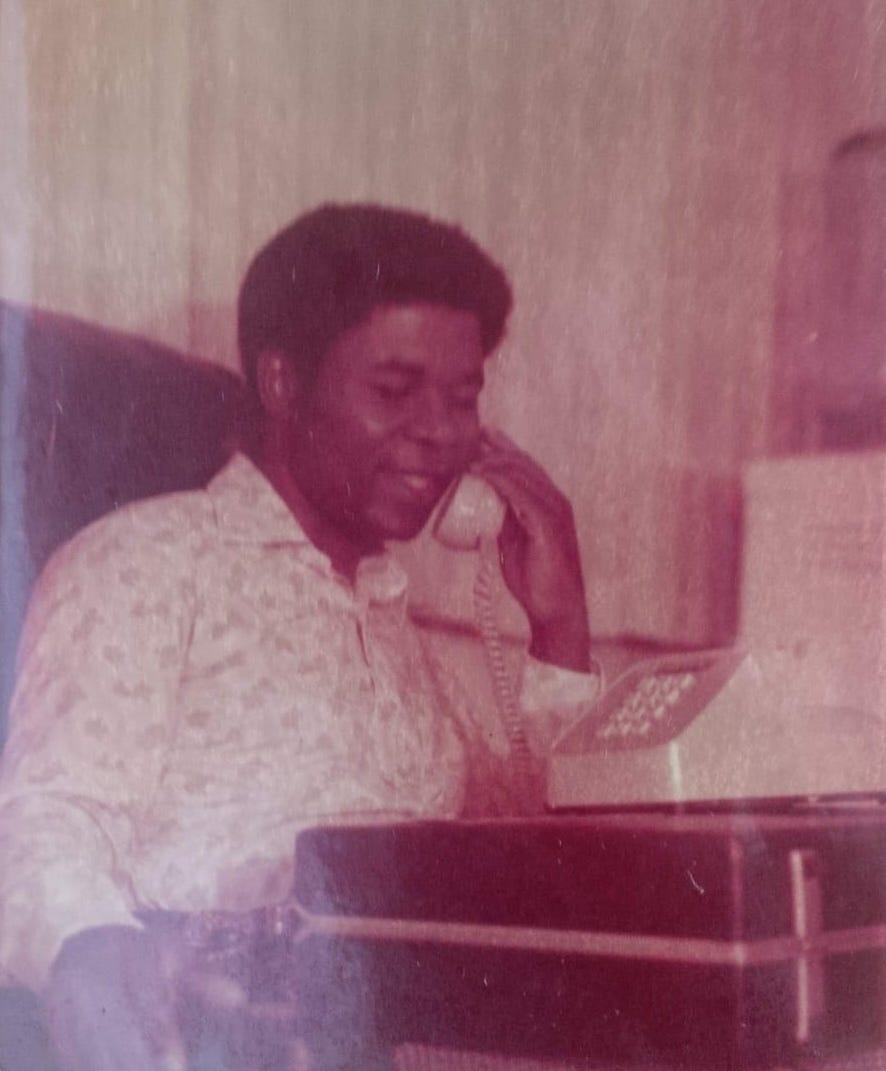
The next day, he was visited by a military man who asked questions. The officer’s attention was drawn to the signal pistol on the window ledge. He asked Aniebo what the object was and the colonel explained. The officer took the signal pistol with him when he left.
Aniebo spent a week at the police station. Then he was made to face a special tribunal on four charges. “The charges were that I did not inform army headquarters about military movement, I did not take appropriate action to prevent my headquarters from falling, that I failed to use the reinforcement sent by Army Headquarters to check the enemy, and that I wanted to kill Ojukwu with a Verey light signal pistol.”
Aniebo had no lawyer and had to prepare for his own defence. He had one of his former staff officers, Olympia Mbakwem, smuggle in operational documents through the office window of the police station.
Although Aniebo cannot remember the exact location where he was court martialled, he remembers that “there was heavy security around the place. Soldiers and police were on the road to the place and at the place.” He called his trial “a mockery of justice.” None of the witnesses he called in his defence appeared in court because they were at the war front. “My accusers however were able to marshal ten witnesses!”
With the exception of Brigadier U. O Imo, the senior officers heading Aniebo’s special tribunal were largely the same ones that convicted Victor Banjo, Emmanuel Ifeajuna, Philip Alale and Sam Agbam for plotting to overthrow Ojukwu in September the previous year. The four were publicly executed. According to Aniebo, the four were “set-up”.
The military officer who visited Aniebo at the police station, in his testimony, argued that he had tested the signal pistol and found it to be a lethal explosive. “A Verey light pistol is a signal pistol, not for killing people,” Aniebo said. He defended himself successfully and cleared himself on all counts, except for the charge of attempting to kill Ojukwu with the signal pistol. “That was the charge I was found guilty of and I was condemned to death by firing squad.”
That the tribunal – which included military officers who knew that a signal pistol was not an ideal weapon for murder – gave their support to the sentencing on that charge lent credence to the farce the court martial really was. There seemed to be a determination by the authorities that someone had to be held responsible for the debacle in Uyo. The prized town had fallen. And so would Aniebo’s head.
***
My first encounter with I.N.C Aniebo was in 2013 when I visited my former English teacher, Ms Kate Agba, and saw her old copy of Of Wives, Talismans and the Dead, a collection of short stories, on the dining table. When I started reading it over a decade ago, the first story had the same effect on me as the rest: it held me prisoner. The prose was sterling and fluid. Each story kept you flipping pages. And at the end, you find wisdom and transfigurative profundity. The themes of the collection ranged from the social to the esoteric, and commentaries on warfare.
Few writers wrote about the Biafran experience with the combination of firsthand military experience and descriptive language Aniebo brought to it. His treatment and insights on the war spring not only from hindsight, but also the authority of a witness. For over fifty years, he had paid his dues. But his name is obscure in Nigeria’s contemporary literary community. I believe the accomplishments of our older generation are barely documented.
Two years ago, deflated by the scant information of the author online, I decided to seek Aniebo out. I didn’t even know if he was alive. I sent a direct message to a LinkedIn account that bears his name but got no response. Then I remembered reading Winging Words which featured an interview between the late Ezenwa-Ohaeto and Aniebo in the 90s. So I turned to the deceased’s wife, Professor Ngozi Ezenwa-Ohaeto of Nnamdi Azikiwe University, Awka, for help. She gladly referred me to Professor Akachi Ezeigbo, a writer whose children’s books I admire. It was Professor Ezeigbo who confirmed that Aniebo is still kicking and generously sent me his contact information.
The first phone call I placed to Aniebo was not answered. However, hours later, he phoned back. I anxiously picked up. I introduced myself, told him how I got his contact, how I discovered his work and my admiration. Then I asked if he would be open to an interview. His voice faltering, weary with age, he said he couldn’t speak for long. He had been sick. So we talked for about 15 minutes.
Aniebo wasn’t satisfied with the high cost of books, especially his, which had become scarce in bookshops. He wasn’t happy with the University of Port Harcourt for not granting him a professorship, despite his intellectual and literary contributions to the institution for over two decades. His second wife, Chiaka, passed away in 2022, and his grief was irresoluble. “I should have gone first,” he told me.
That first phone call was the beginning of a long correspondence that progressed through more phone calls, emails and WhatsApp messages. He sent me some of his books and I emailed him some questions about his life. His mailed answers often came at midnight. I felt a meeting was necessary, so I suggested visiting him in Port Harcourt. He obliged. “You can come see me anytime.”
A week after the passing of his first wife in America, I went to see Aniebo at his Port Harcourt residence. I was welcomed at the gate of the white, well-kept one storey-building by Mr Loveday, a short young man whose face seemed to perpetually be on the cusp of a smile. He had been looking after the patriarch and the house for three years. After waiting for some minutes in the big airy sitting room with books and papers strewn on the table, Loveday came down and announced that my host would see me now, upstairs.
So I went up the flight of stairs, on Loveday’s trail. He made a turn and I followed. I found myself in a room filled with books, cartons and a whirring standing fan. The air conditioner was possibly at its lowest. In a corner, just by the closed door, sat a lean, frail, clean-shaven and bald man in a light green short-sleeved tunic. He looked up to me and said something that sounded both like, “You’re long” and “What took you so long?” Either way, I had no answer.
***
Ifeanyi Ndubuisi Chiekezie Aniebo was born on January 31, 1939 in Port Harcourt. Like many Africans, he was given an English name at baptism, but when he grew up, he “rejected” it. When I asked what the name was, Aniebo replied, “I have forgotten it.”
Then he told me a story. One day, as a young student, he was on a train from the north to Umuahia. He was about to resume studies at Government College, Umuahia. On the train with him was a young seminarian.
“He was tall, from Enugu. I think he was going to Port Harcourt or something. He was young like me.”
They struck up an acquaintanceship and started conversing about different subjects. Then they arrived at the Umuahia railway station.
“He now wrote his name and address and gave me and said we should be communicating by mail. I gave him my own address.”
When the young seminarian read it, he asked, “What is your Christian name?”
“Ifeanyichukwu.”
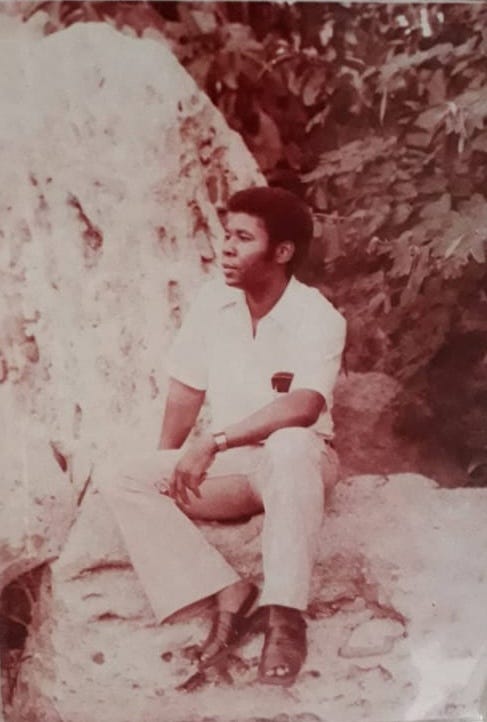
“No, no, no,” the seminarian protested. “That’s your heathen name. You say you are a Christian. You mean you don’t have a Christian name, an English name?”
“No, I was baptized with Ifeanyichukwu,” Aniebo insisted.
The seminarian said, “I don’t write heathens,” tore up the address and strode away.
“I felt terrible,” Aniebo told me. “I’ve never forgotten that incident.”
***
Aniebo was the first son and eldest in a family that would later become polygamous when his father, Nwafor Augustine Aniebo, took a second wife. His father was an apprentice engineer with the Nigerian Railway Running Shed Foreman, maintaining the locomotives. “I lived in whatever town my father was posted – Enugu, Minna, Zaria, Kafanchan, Bukuru, Port-Harcourt and so on.” The elder Aniebo was promoted to the rank of Chargeman, and worked eight-hour shifts with a team. “You go to work 7am and return around either 2 or 3pm. Then you hand over to another team.” His mother, Chijioke Monica, was a trader with no Western education. Aniebo once arranged home lessons for her, but after she overheard him telling someone that he was “teaching” his mother how to read and write, she refused further classes. His paternal grandfather, Nwokekwe Aniebo, was a popular musician in their village Amuda, Umunze in Anambra state. “I’m his reincarnation,” Aniebo told me.
Shortly after his birth, his father was posted to the northern part of the country and the whole family moved. “I grew up in Minna, that’s where I went to elementary school and became part of a church. First of all, we lived in a railway compound, no, we lived in a specially built railway quarters. Then from there my father got land in Sabon Gari and built his own house. I don’t know how he managed it but he got two portions instead of one and built two houses, and we lived in one and rented out the other.”
Aniebo confessed to being a stubborn child and not having a close relationship with his father. The man spent long hours at the railway station and there were over fifteen children to be looked after; at the time the deep intimacy between parent and child wasn’t commonplace. “I used to draw cartoons until my father stopped me. When I was in Zaria, he had arranged for my English teacher to teach me handwriting. So from there, I began to learn how to write.” The child’s handwriting was so good his impressed father always made him “rewrite his replies to queries”.
Minna, which would feature in some of his short stories, was also an education for young Aniebo. “It was there I discovered that my nose was very big, because one man always made jokes about me, each time I was coming home from school.” The man would call him, “Aniebo with the big nose”. Aniebo remembered, “It used to hurt me but I learned how to take it in stride. It was in Minna that I also had a best friend who taught me not to trust best friends absolutely. What else did I learn? I fell in love with a classmate. I stole my mother’s money and she caught me. In fact I’m thinking about writing a short story about that particular incident, the way she handled it. I also broke my arm in Minna.”
It was also in Minna that young Aniebo had his first and enduring impression of death. “The church had a wagon, a specially built wagon that you had to push, with which they carried coffins to the church and from the church to the burial ground. It had a specially built place where they kept it and I became aware that death was very powerful. Minna was a real growth place for me. From Minna we moved to Zaria and we stayed in Zaria for three years. Initially, my parents left me behind in Minna because I hadn’t taken my final exams, so they arranged for me to stay back and finish that school year. When I passed standard 4, I joined them in Zaria and did Standard 5 and 6.” Then Aniebo was offered a place in Government College, Umuahia in 1952.
Founded in 1929 by an English missionary, Robert Fisher, Government College, Umuahia, christened “The Eaton of the East”, was one of the two first-class boys boarding schools in Nigeria; the other was at Ibadan. Strictly modelled after British colleges in architecture and character, the school began as Umuahia Teacher Training College before it was elevated to Government College. Within two decades the college – staffed with British teachers, some who were servicemen in World War 2 – had produced an incomparably formidable alumni of artists, writers, soldiers and politicians like Ben Enwonwu, Gabriel Okara, Jaja Wachuku, Chinua Achebe, Alexander Madiebo, Chukwuemeka Ike and Christopher Okigbo.
The college had four houses: Niger House, Nile House, Cozens House and School House. Aniebo found himself in Niger House. His contemporaries included Ken Saro-Wiwa, an activist executed by the Abacha regime. A complete sportsman, Aniebo played various games which included football and hockey for house and college. “I took part in all the sports in the school: cricket, hockey, football, and lawn tennis. I represented the school in matches against other schools such as King’s College Lagos, Holy Ghost College, Owerri, Methodist College, Uzuakoli, and later Government College, Afikpo. I played in all the teams – Colts, 2nd and 1st Elevens. I had also joined two or more societies such as the debating society, the geographical society, and even created a musical society that played gigs for staff and students. But there was no literary society. All we had then was a well-stocked library for its times. We were also constantly reminded to use the library, especially when there was an arrival of new books, usually a mixture of clean second-hand and new books from the United Kingdom.”
Aniebo read “eclectically but it was mostly fiction. I still read like that. There is nothing I enjoy more than reading a new book of fiction. In fact it affected my studies at Umuahia.”
***
One day, on his way to college in a lorry, a luxurious Ford car, sped past them. Such vehicles were rare in those parts and easily established the background and class of the owner. The passengers wouldn’t stop staring at the Ford. Aniebo also got curious. He made out the features of the driver – who was just a few years older than him – of the car thinning in the growing distance. Other passengers had already identified the name of the young man in the Ford. They called him Chukwuemeka Odumegwu Ojukwu.
***
Aniebo recalled the toughest English teacher he ever had, Mr D Marriot. “We used to call him Tarkpa,” he remembered. “He was very slim. If you make four over ten in an essay, you are a fantastic writer. Four over ten, that is his highest mark. If he gives you five, oh, you must be Einstein!” Aniebo admits to appreciating him more “after he left on leave and a Nigerian university graduate took over. Suddenly I found myself getting 70/100 in most assignments, but the close marking Tarkpa had got me used to was not there.”
Soon Aniebo suffered an academic setback. At the end of the second year, he was denied promotion to Form 3. Although he said the reason the teacher, B. Cozen, refused to promote him was because he failed Latin, “despite having passed all his subjects,” Aniebo told me. “I was made to repeat that year, even though I didn’t fail. They said I was badly behaved. I had accumulated more detention periods than anybody.”
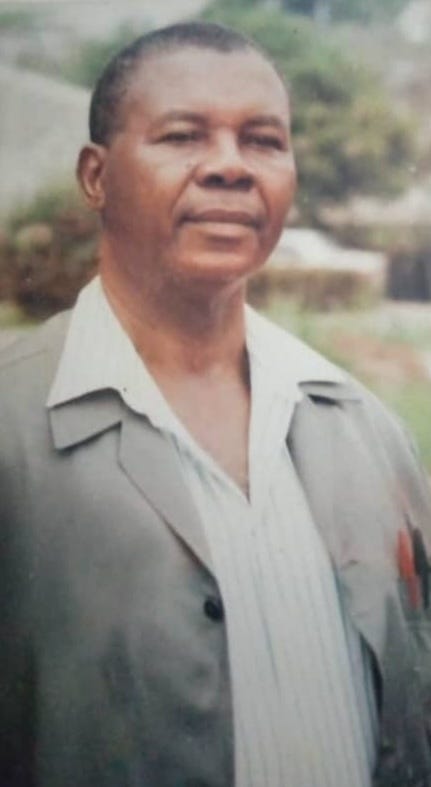
There were two types of detention when Aniebo was a student: school detention and house detention. In the school case, a student could earn detention if he isn’t sitting up or if he is bending down to pick up something in class, or exhibiting any sign of distraction or inattentiveness. Judging the student not ready for the lesson, the unimpressed teacher would order him out of the classroom to the principal’s officer to procure the detention book. “You could get one hour detention.” Detentions could also involve grasscutting for at least two hours. At the student and house level, a prefect can also punish with detention if you behaved inappropriately.
Because of this incident, his classmates like Timothy Onwuatuegwu of the January 1966 coup fame proceeded to the next class without him. Now peers with his juniors, Aniebo was so disillusioned by the experience he couldn’t “develop any close or meaningful friendships at Umuahia.” Of Government College, Aniebo would describe it as far from “humanistic.” He said, “with what happened to me, I felt it was a well-run prison. As long as one obeyed or followed the rules and performed well academically, one was well-regarded . . . despite all my activities, I felt I was not well regarded, and I was glad to leave.”
Some of the students would go on to have wonderful careers as writers, artists and military men. Some of Aniebo’s teachers were World War 2 veterans and their charisma, character and uniforms made him want to be like them. So, on writing his final exams, he joined the army in 1959. His army number was N84. “I chose the Army. I applied, went for the exam in Enugu, passed. Went for the second exam in Kaduna, was selected. Went to Ghana for the initial training, passed. Went to the UK for the officers training, passed. In other words, normal progression. I was trained as an Infantry Officer.” Aniebo said the army was a “brotherhood”.
Although he had been writing for years, the first story of his to get published was in 1963. “I sent one to Nigeria Magazine, the best magazine in Nigeria at that time. When I received not only the letter accepting the story but also, money, it made me so happy, even though I was already in the Army earning money. I saw it as an avenue and from that, I began to feel that my stories could actually be read by other people in the newspapers and so on. I think that story must be in Of Wives. Onuora Nzekwu was the editor of Nigeria Magazine. He not only accepted and published that first short story but he made sure he invited me to his house in Lagos and I had lunch with him and his family. We became very close friends and remained so until I left for UCLA. It was actually from his house that I went to America.”
In June 1964, Aniebo published a critique of Chinua Achebe’s Arrow of God. It was titled Novelist or Sociologist?: A Review of Arrow of God. “In the old days, the newspapers used to publish criticism, but publications of criticism is no longer an ongoing business as before,” Aniebo said. “Nigerians now tend more towards social media and other forms of communication rather than writing, so it will be difficult to keep to the old methods of criticism. A new school is open and it will determine what its players look like and what their forms of expression will be.”
But short stories were his forte. He and Cyprian Ekwensi are probably the finest and most prolific authors of the short form from that generation. “I’ve always wanted to write but not as a living, just to be able to publish things and see my words out in the world. I prefer short stories to novels so I could churn them out quickly. And it is the form that was most advantageous to me considering that I had to work for a living. It afforded me the ability to still write and build a new career after the war ended. To me writing is a pleasure. I can write at any time, anywhere. I have never created a schedule for writing; for me, I can wake up in the middle of night to write, or write in a car, anywhere.” His stories are all handwritten. “My stories are not usually written in one swoop, some stories can take up to six months to complete. Unless I had a deadline to meet, then I would have to purposefully sit down and write till it is finished but this has happened only once when I wrote a story for a competition. And I won!”
The prize Aniebo won was Radio Nigeria, Christmas Short Story Competition, 1965. The story was The Peacemakers. Part of the winning rewards was that the writer of the story would read the story on a radio program broadcast across the country. But Aniebo was so reserved he turned down the offer of a radio appearance and had to listen to the story read by another person. He couldn’t have been prouder.
****
As Aniebo’s literary output was gathering steam, so was his military career. As a second lieutenant in the early 1960s, he was a company commander in the United Peacekeeping in the Congo. He was the aide-de-camp to Chief Moses Majekodunmi who became Sole Administrator of the Western Region in 1962. He was Military Secretary at Nigerian Army Headquarters in Lagos from 1963 to 1965 and drove to meetings with future General Theophilus Danjuma.
It was at this time that Aniebo met and fell in love with the administrator’s secretary, Gloria, a black American. That she was a foreigner, a divorcee and three years older – factors that would have raised eyebrows in Igboland at the time – meant little to Aniebo. They married and had a son, but in a few years the union collapsed. Despite the personal disappointment, “I progressed in the army ranks, got to be a Major, selected where to do my staff course at Command and General Staff College at Leavenworth, Kansas, and finished it. By the time I returned, the first coup had occurred.”
On the night of January 15, 1966, revolutionary majors of mostly eastern extraction, with the happy involvement of the rank and file drawn from every ethnic group obtainable in the army, launched a coup which they said was to sack the unpopular government and save the rapidly disintegrating country rocked by a series of political crises. Unpopular politicians and respected northern senior officers lost their lives in the coup. The news of the coup triggered wild jubilation across the country. But after taking over the government, General Johnson Aguiyi-Ironsi, who was not part of the coup, arrested the leading revolutionaries – including Kaduna Nzeogwu – and locked them up.
“I had dealings with some of the people that carried out the first coup. I lived in the Apapa Officers Mess with Nzeogwu, and Humphrey Chukwuka.” Aniebo remembers Nzeogwu as a friendly officer who, although he never drank, would buy a sullen friend a drink just to cheer him up. Contrary to some reports that he wasn’t fluent in the language, Aniebo told me Nzeogwu spoke Igbo very well. “I also lived in the Zaria Mess with Okafor. John Obienu was a close friend of mine in Lagos and Onwuatuegwu was my classmate at Government College Umuahia. I am certain that had I not been in the USA during the coup I would’ve been invited to join. Even up till now, I don’t know if I would have rejected the invitation.”
Aniebo reported to Aguyi-Ironsi and was posted to Kaduna. Aniebo thought to himself, “I must have leave days left over’, so I took my leave.” He intended to report to Kaduna after his leave. He travelled home to see his parents. “While I was on leave, the second coup occurred.”
In July 1966, northern politicians and soldiers, fed up with the Ironsi government which they saw as the peak of southern domination, staged a retaliatory coup. The stated aim was to avenge the January killings and secede from the country. Ironsi and his host, Governor Adekunle Fajuyi (who reportedly expressed sympathy for the January boys), were abducted and murdered in Ibadan. The coup was initially viewed as a massive northern revolt against the whole south and this reflected in the early days of the pogroms that followed, but the organizers eventually narrowed it down to a war against the east, the Igbo ethnic group in particular. The reason for this amendment of objective, according to Alexander Madiebo who commanded the Biafran army, was that “this change of attitude was designed to remove the possibility of a co-ordinated and effective resistance by the entire peoples of the South against the North. With the Igbo as the guinea pigs, the other Southern tribes heaved a sigh of relief and were too happy to call the war that followed “an Igbo rebellion”. In a country in which the Igbo, the major ethnic group of the east, had long been suspected of a determination to dominate every square inch of it, it was easy for them to be singled out as the common enemy. This age-old paranoia, rationalised vindictiveness and the damning myopia of the ruling class led to the slaughter of over 200 eastern officers and the dastardly killings of over 30,000 easterners in the pogroms that followed. Aniebo lost friends and properties in the crisis. Almost no picture of him as a Nigerian officer survived.
Colonel Yakubu Gowon, Ironsi’s Chief of Staff, succeeded him. Colonel Ojukwu, whom Ironsi had appointed the Governor of the Eastern Region for his role in helping crush the January coup, refused to recognize Gowon, who wasn’t the most senior in the military, as Head of State. Like the January affair, the July coup had also failed in the Eastern Region.
The pogrom and the gory accounts of survivors and their mutilated bodies charged the Eastern Region with fury. Almost every Igbo family had suffered a tragedy. The “Hausa” – as everyone from the north was labelled, same way everyone from the east was erroneously branded “Igbo” – became victims of reprisal attacks. The failure to implement the Aburi Accord consequently set the country down the path of war. While it made seemingly peaceful overtures, the Federal Government stocked up arms. The eastern government supported marches and demonstrations for secession. A showdown was inevitable.
“After the second coup, before Aburi, the Igbo eastern army officers reported to Enugu and the agreement was that all those in the east should remain in the east. The northern soldiers and officers in the 1st Battalion Enugu were sent to Kaduna, thus creating the southeastern command under Colonel Hilary Njoku,” Aniebo recounted. Of Njoku, he said impassionedly, “He was a no-nonsense officer. I loved that man.”
Like many Igbo officers, Aniebo didn’t believe secession to be the answer to the crisis. He thought it was “nonsense” and remarked that Biafra was a “stupid effort”. Ken Saro-Wiwa’s report provides rich insight into Major Aniebo’s attitude towards the direction the Eastern Region was headed. According to Saro-Wiwa, Aniebo “showed positive distaste for all that was happening. He objected in strong terms to the propaganda then being peddled in dull, monotonous editorials by the Eastern Outlook, Ojukwu’s mouth-piece. He told me Ojukwu was an arrogant fellow who would lead everyone to disaster. He was very critical of the unabashed euphoria which was prevalent on campus; and even more critical of the Region’s dominant shade of opinion which refused to accord the minorities the right to self-determination.”
Two years after General Ojukwu’s death, Aniebo wrote his assessment: “Personally I think Ojukwu was not a leader at all. In fact he was a disaster, and left Ndi Igbo in a worse position than he met them. He was a puppet-master intent on having complete control of those around him.” He has no doubt that “if a different person was the Governor of the Eastern Region there would have been no war. But given the personalities of the people involved it was inevitable.” Gowon, he said, was “unreliable”.
In a correspondence, Aniebo said to me: “Ojukwu, our late leader, coming from a very wealthy background, like Trump of the USA, did not know how to pick good people. For him, loyalty and worship were the most important! Nigeria won the war because of the circumstances and the period. Now that South Sudan is free, no one will talk about the fear of Balkanizing Africa. And come to think of it, did we create the stupid countries of Africa? No!”
As Nigeria swayed on the edge of disintegration, Aniebo was ordered by the eastern military authorities to lead an unarmed company to Port-harcourt “to establish military presence and that was the beginning of my service in Biafra.” This deployment was the basis of Getting Ready, the first story in his 1998 collection, Rearguard Actions. “From there, I was withdrawn to Enugu and battalions were created in the eastern command, one to be based in Nsukka. I was deployed as second in command of that battalion.” His commander was Alexander Madiebo, whom Aniebo told me he never laid eyes on from the beginning of the war to the General’s demise in 2022. “Madiebo remained at Enugu while I went to Zik’s Flats, Nsukka to establish the command. As you know Madiebo was an artillery officer and I, an infantry officer.” Before the declaration of Biafran independence, Aniebo was withdrawn from Nsukka to Enugu Army Headquarters and appointed Quarter Master General to replace Colonel Effiong who became second in Command of the Biafra forces.
At the Biafra Army Headquarters, as Quartermaster General, Aniebo “realized how unprepared we were for the war. From then onwards, I knew we would lose the war. I also knew the war would not solve our problems.” The new republic had nothing in its armoury. Biafra was naked, and a storm was coming. Certain that the cause would be lost, Aniebo implored people close to him “to take care of themselves”.
Later, Ojukwu sent Aniebo abroad to procure weapons and old armoured vehicles, some of them so old they were last used during World War 2. He said grievously, “I didn’t know I was signing the death warrant of Christopher Okigbo. Because it was one of those old equipment that he was in when he was killed at Nsukka”. He knew the poet personally and visited Okigbo and Chinua Achebe occasionally at Citadel Press, Enugu. Okigbo was “very friendly, more friendly than Chinua Achebe. He believed in a state for the Igbo.”
One of the sorrows of the war for Aniebo was its wastefulness of youth. He had an exceptional young man, Colonel Willie Archibong, under him, who was killed in an attack, all that promise gone. General Madiebo had described Archibong as “one of the bravest soldiers I have ever met.” Another tragedy also struck. Aniebo told Ezenwa-Ohaeto in the 90s: “I selected a young captain to go and command a battalion at Awka. What used to happen in Biafra was that when an area is threatened the commanders are asked to send battalions to form a unit and help. Often it is a way to help young men progress, so I did it for this young officer but unfortunately he was killed.”
After Aniebo returned from an arms procurement trip, he saw he was no longer Quarter Master General. “I was now given a Brigade in Uyo to command and promoted to Colonel.” It was not a rank Aniebo would relish for long because Uyo soon fell to federal troops. After the collapse, “I was told the Head of State wanted to see me, that I should hand over to my colleague Colonel Ivenso. I did as told but never saw the Head of State, it was there that I was arrested and charged with treason.”
When Aniebo heard his own death sentence at the Special Tribunal, he “thought they were joking.” They were not. Aniebo was handed over to the military police, who drove him to the military police headquarters, originally a school in Umuahia. He was thrown into the Death Cell, formerly the teachers’ living quarters.
***
Death Cell was a room for those condemned to oblivion. The only thing standing in the way of his execution was Ojukwu’s approval. Alone in the cell, Aniebo was living on extra-time. But he was well taken care of. He was fed, his room had its own toilet and bathroom, a chair and table, and he was allowed guests; some inmates even hosted women. Aniebo grew a beard.
“Ebitu Ukiwe was occupying the room next to me,” he remembered. After the war, Ukiwe, then a Navy Commodore, would serve as the Vice President of Nigeria under General Ibrahim Babangida for a year. “It was better than the police station. The only time I suffered was when the police held me.” Every time he had his bath, he would look at himself and wonder, so very soon this body will be killed and destroyed? In jail, awaiting execution, Aniebo wrote the short story, Of Wives, Talismans and the Dead that would about a decade later appear in the collection of the same title.
A miracle happened for Aniebo. He was suddenly informed that his death sentence had been commuted to life imprisonment. “I was told senior officers went to Ojukwu on my behalf but Biafra surrendered shortly after and my brother came to tell me that the war was over and I was free.” With his brother’s help, he left the prison quickly, convinced he would be killed if he was caught by the approaching federal troops. His brother, Augustine, who was in the Biafran army, would be a military governor in General Sani Abacha’s regime.
“Before the war, I had always felt we were a very caring people, that to us life mattered a lot,” Aniebo said. “That changed after the war. I realised that it’s the circumstances that determine what happens to any life. For example, even though I didn’t take part in the coup, I was a victim of it. My every step was coloured by this event and it was like someone took me from where I was going to and put me on a different train, with no set destination.”
***
Aniebo’s trial in Biafra had a sequel. In 1981 he became Dean of Students at the University of Port Harcourt. When it was a few months to the end of his tenure in 1983, the university got a new Vice Chancellor. The Chancellor turned out to be a member of the special tribunal that sentenced Aniebo to death in Biafra. On a Friday, the Chancellor summoned Aniebo and “insisted I resign the following week for him to appoint his own man. The man who was a member of the Biafra Tribunal that sentenced me to death and meeting me alive afterwards removed me from a job I was doing before he joined the university.” The disgusted Aniebo resigned that Friday.
***
In 1970, the Nigeria-Biafra war ended after Ojukwu flew to Ivory Coast. The following year, Aniebo was discharged from the Nigerian army. When Aniebo was hoping to be admitted to University of California, Los Angeles, he had cause to visit Army Headquarters, Lagos. He ran into Murtala Mohammed, who had been his junior before the coups. Mohammed was notorious for his temper, his orchestration of the counter-coup and being responsible for the Asaba massacre. “He was very angry when he saw me. ‘Aniebo, what are you doing in my headquarters? Get out of here!’ He wasn’t a very nice man.” Mohammed was assassinated in 1976 shortly after he became Head of State.
Aniebo had a different experience meeting his old acquaintance, General Danjuma. At the reunion, Danjuma learnt of Aniebo’s academic interest and grave need for funding, so he quickly put a call across to Ukpabi Asika, the administrator of the East Central State, in Enugu. Shortly after, Aniebo received a government scholarship and he headed to the University of California, Los Angeles where he earned a Bachelor’s degree in English Studies.
At UCLA, he won literary prizes. “I did win prizes at UCLA when I was there,” he told me. “Unfortunately I can’t remember the years or the name of the second award. The first award was for my short story and the name of the award was Kurnitz. It is an annual affair and I won it twice with my short stories. The second prize whose name I cannot remember now was for my second novel The Journey Within before it was published by Heinemann of London. The prize was given by the UCLA English Department. I was a graduate student at the time and the cash prize was very useful. ”
In 1974, Aniebo’s first novel, The Anonymity of Sacrifice was published in the African Writers Series. The story, set within three days of the Biafran war, is told from the experiences of a rather suave, calculative commissioned officer, Captain Benjamin Onwura, and brash, erratic Sergeant Cyril Agumo. “I know that people view life differently and it is these various views that tell you what life is all about. So in my creation of characters I present multifaceted views,” Aniebo said. The reversal of fortune at the front makes a tragic collision between two men of markedly different backgrounds and temperaments inevitable. Aniebo feels the book was “underappreciated.” He pointed out, for one, a certain professor who didn’t see the merit in exploring an event through contrasting perspectives.
After graduation, his second novel, The Journey Within, was published in 1978. Willifried Fauser’s unwavering interest in Aniebo’s short stories that had appeared in different publications across the world over the years saw the birth of the collection, Of Wives, Talismans and the Dead, the book Aniebo feels is his “most appreciated” work. “I didn’t gain as much popularity as other writers because my topics were not such that they would make everyone sit up and take notice.”
In the early 80s, Aniebo began a romance and married Chiaka Edith Mbakwem, the younger sister of Olympia, his junior officer during the war. The couple became lecturers at the University of Port Harcourt, Departments of English and Microbiology, respectively. They had three daughters: a doctor, a filmmaker who is also the executive director of Aniebo’s literary estate, and an engineer.
In May 2000, President Olusegun Obasanjo pardoned 160 officers of the Nigerian Armed Forces who defected to Biafra at the outbreak of the civil war. Their dismissal was commuted to retirement with benefits. Aniebo received about five million naira.
Till his retirement in 2009, Aniebo taught Creative Writing in the department. The best writing from this sustained exercise was compiled into Harvest of Two Decades – Stories and Poems from the Aniebo Workshops 1988-2008 edited by Seiyifa Koroye. Aniebo published two collections of short stories in the 90s, Man of the Market (1994) and Rearguard Actions (1998). I consider the latter his most artistically accomplished output. I’d read elsewhere that he won the Association of Nigerian Authors Prize for Prose with Rearguard Actions the same year it was published. I didn’t see Aniebo’s name on the association’s website listing him as a winner. I asked him about it. He answered via email: “Now that you mention it, I believe I won the ANA prize with Rearguard Actions and up till now have not received any notification! I am not surprised you found nothing about my win in the ANA website! To tell you quite frankly I was very sceptical of ANA prizes when it started. How can the Nigeria I know do anything right?”
•••
In recent years, the proscribed separatist group, The Indigenous People of Biafra, have been in the news for their agitations. Their leader, Nnamdi Kanu, has been sentenced to life imprisonment on terrorism charges. I asked Aniebo what he thought about the group’s quest for secession.
“The younger generation don’t know what they are looking for,” Aniebo said. “From all that I have read about their agitation, there seems to be a lack of care about the individual. When you are ready to throw away 10,000 lives to achieve a purpose without bothering if yours would be included, it shows you have not looked at the matter carefully. The human race is given to self preservation. If the people planning your independence don’t have consideration for their own lives, why would they have any for yours? The youth are wasting time and resources on the wrong agenda. Our communities lack infrastructure, vision and unity. When you get the Biafra you seek, how will you run it?” ✚
Olisa Eloka is a writer and filmmaker. His historical fiction manuscript which captures African participation in the Burma campaign of the Second World War was longlisted for the Saraba Manuscript Prize. His short stories and poems have been published in Nigeria and the United Kingdom. He wrote and directed Loose Cannon, a short film which explores the aftermath of the Nigerian civil war. He wrote the forthcoming historical drama, 77: The FESTAC Conspiracy. He lives in Lagos.
*An earlier version of this profile overstated Aniebo’s contributions to the Biafran war literature.